
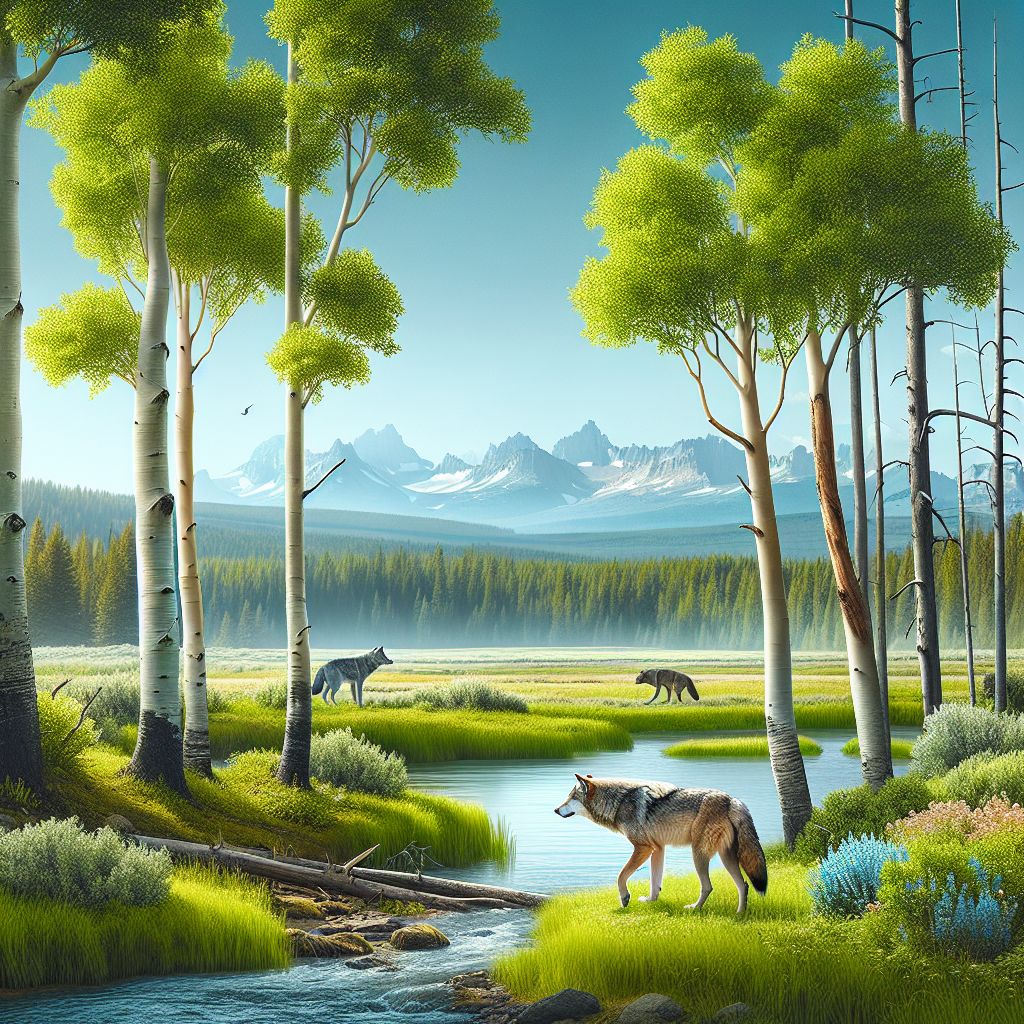
The Return of Wolves and Aspen Tree Revival in Yellowstone
Yellowstone National Park has long been a natural treasure, renowned for its diverse ecosystem and breathtaking scenery. One of the most remarkable ecological stories from Yellowstone involves the return of gray wolves and the subsequent resurgence of aspen trees. This dynamic interaction illustrates the profound effects predators have on ecosystems, demonstrating the concept known as a trophic cascade.
Wolves Reintroduced to Yellowstone
In the 1920s, wolves were eradicated from Yellowstone National Park due to widespread hunting and predator control policies. Their absence led to significant changes in the park’s ecosystem. Without wolves to keep them in check, populations of large herbivores, especially elk, grew unchecked.
By the mid-1990s, the overabundant elk herds had a heavy impact on vegetation, including the young aspen trees and willows. This herbivory pressure stunted the growth of these important tree species, altering habitats for numerous other animals.
In 1995 and 1996, wolves were reintroduced to Yellowstone as part of a carefully planned restoration effort. This marked the beginning of a fascinating chain reaction throughout the ecosystem.
Impact on Elk Behavior and Numbers
The reintroduction of wolves renewed the balance between predators and prey. Wolves naturally prey on elk, but beyond reducing their numbers, wolves also altered elk behavior. Elk became more vigilant and avoided some open areas where they once grazed freely. This behavioral change reduced browsing pressure on certain vegetation types.
With fewer elk and more cautious grazing habits, young aspen trees had a chance to grow beyond the reach of heavy browsing. This shift significantly impacted the park’s plant communities.
Aspen Trees Bounce Back
Aspen trees are critical to the Yellowstone ecosystem. They provide habitat and food for various species, from insects to birds and mammals. When elk overbrowse young aspens, the trees struggle to reach maturity, which limits their ability to regenerate.
Since the return of wolves, scientists have observed notable increases in aspen recruitment and growth. Young aspen stands are growing taller and healthier. This resurgence of aspen also improves habitats for many species and enhances biodiversity.
Broader Ecological Effects
This ecological response is an example of a trophic cascade, where predators indirectly affect vegetation by controlling the behavior and populations of herbivores. The restoration of wolves has led to healthier plant communities, improved streambank stability, and greater biodiversity.
Other species, including beavers and songbirds that rely on healthy aspen stands, have also benefited from this renewed balance. The presence of wolves has revitalized complex food web interactions and overall ecosystem health.
Lessons from Yellowstone
Yellowstone’s experience highlights the importance of apex predators in ecosystems. It challenges previous conservation models that focused mainly on individual species without considering ecological relationships.
The wolf-aspen story inspires ongoing efforts in ecosystem management and wildlife conservation worldwide by demonstrating how restoring predator populations can have far-reaching benefits.
Conclusion
The return of wolves to Yellowstone National Park has revitalized not only the wolf population but also the park’s vegetation, especially aspen trees. This natural restoration process exemplifies how interconnected species are within an ecosystem and the critical role predators play in maintaining ecological balance. It’s a powerful reminder of the delicate harmony in nature and the positive outcomes when humans help restore it.
References:
– Ripple, W. J., & Beschta, R. L. (2004). Wolves and the Ecology of Fear: Can Predation Risk Structure Ecosystems? BioScience.
– Yellowstone National Park Service resources.
– Various ecological studies documenting trophic cascades in Yellowstone.
If you enjoyed this deep dive on wolves Yellowstone aspen, make sure to subscribe to ToolTactik for more insights!